冷气水 · Lengqishui
Free PTE Core Read Aloud Practice & Scoring Tips | Lengqishui
Practise PTE Core Read Aloud free with current scoring, 30–40 second preparation, pronunciation, oral fluency, pauses and visual recording feedback.
Product interface
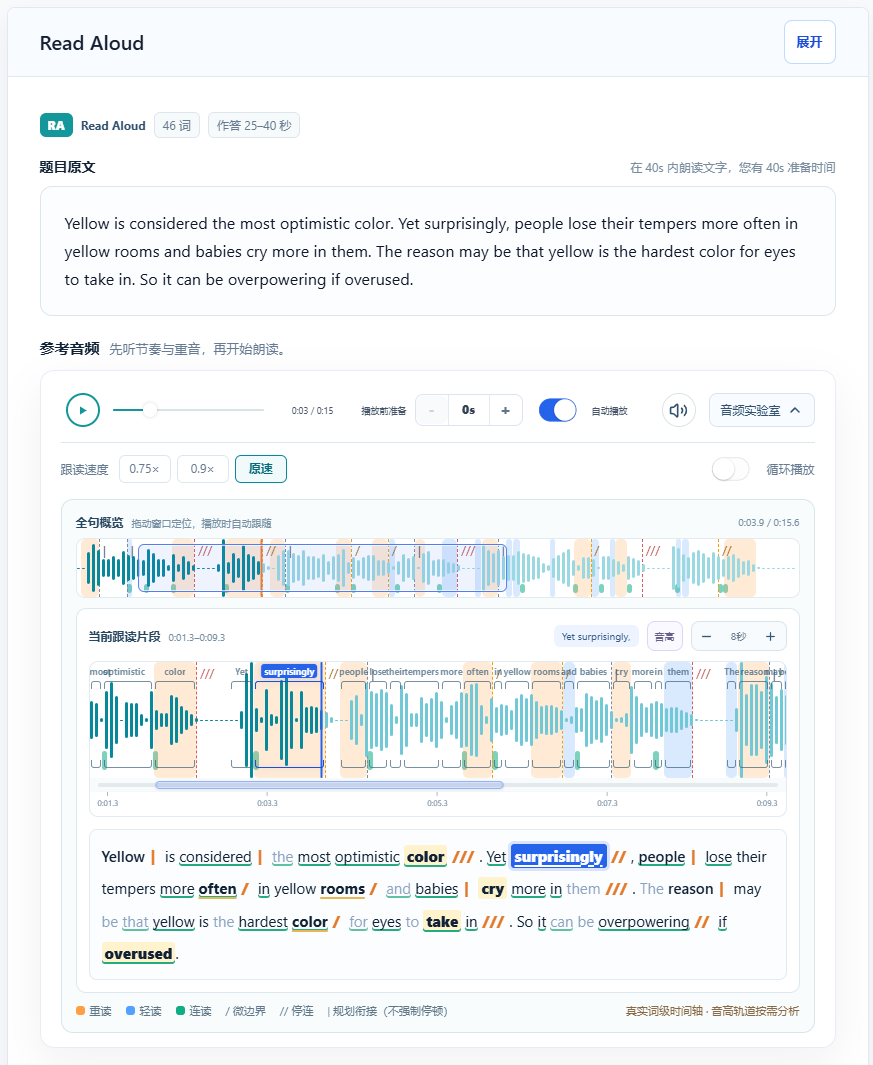
PTE Core Read Aloud format, scoring and practice evidence
Pearson defines the official format and scoring traits. Lengqishui adds independent practice evidence that helps you decide what to change in the next recording.
| Area | Official PTE Core information | What to inspect after practice | Next action |
|---|---|---|---|
| Task | Text up to 60 words; about 30–40 seconds to prepare; response time varies by text length | Recording start, completion and word-level alignment | Preview difficult words, then begin immediately after the tone |
| Content | Each replacement, omission or insertion counts as an error | Matched, missed, replaced or extra words in the available recording feedback | Repeat the missed phrase, then reconnect the complete sentence |
| Pronunciation | Speech should be immediately understandable to regular English speakers | Recording playback and available highlighted segments; use reference audio for comparison | Compare the difficult word with reference audio and practise it in context |
| Oral fluency | Rhythm, phrasing and stress should sound smooth at a constant natural rate | Available recording pace and pause evidence; reference-audio rhythm is a separate model | Remove one repeated hesitation while keeping meaningful thought groups |
| Pauses and intonation | Use punctuation to plan tiny pauses and meaning-based intonation; avoid stopping for more than a second or two | Reference-audio gaps, phrase boundaries, stress markers and supported pitch evidence in Audio lab, not a score for your recording | Compare the reference phrasing with your playback and shorten one unnatural gap |
Free PTE Core Read Aloud practice with current task facts
Read text of up to 60 words after about 30–40 seconds of preparation. Pearson’s January 2026 Score Guide lists 6–7 partial-credit Read Aloud questions assessing reading, speaking, content, pronunciation and oral fluency.
PTE Core Read Aloud does not need an answer template
The full text is already on screen. Use preparation time to understand the meaning, mark phrase groups and important words, preview difficult pronunciation and prepare the opening instead of memorising a generic script.
Avoid long silence after the recording begins
Pearson advises not stopping for more than a second or two once speaking starts. Use punctuation for tiny meaning-based pauses, keep moving through a small error and finish before the recording closes.
Use preparation time to understand the text
Open Practice → Read Aloud in practice mode. Read for meaning first, then mark clause boundaries, punctuation, difficult words and the words that carry the main information. In the official test, use the available 30–40 seconds to prepare rather than trying to memorise every sound.
Rehearse the opening and phrase groups silently
Plan where a small pause is natural and where the sentence continues. Confirm the first few words so the response begins promptly after the tone.
Try this original Read Aloud practice passage
The community library will open an hour earlier on weekdays. This change gives local residents more time to read, use computers and attend short workshops before work. Weekend opening hours will remain the same.
Explore one possible phrasing, not a fixed answer
This is an original Lengqishui practice passage, not an official Pearson question. One possible opening is: “The community library / will open an hour earlier / on weekdays.” The slashes show optional thought-group boundaries, not compulsory stops or extra spoken words. Keep “an hour earlier” connected to express the change, and stress “earlier” and “weekdays” lightly. Other natural phrasing is possible.
Record once at a controlled natural rate
Speak clearly after the microphone opens and keep moving through the text. If one small error occurs, continue forward; restarting the whole sentence can add repetition, a false start and a larger fluency break.
Check content before pronunciation and fluency
First find missed or changed words in the available recording feedback. Then replay unclear segments and inspect the available pace and pause evidence. Reference-audio timing and rhythm annotations are a separate model, not measurements of your recording.
Practise one phrase and record again
In Practice → Read Aloud in practice mode, find Reference audio and expand Audio lab. If the reference audio is still being prepared or loaded, wait until it is available. Use playback, short loops and available stress or thought-group annotations to study one phrase, then record again with the same microphone setup. The linked overview is in Chinese; the audio lab remains inside Read Aloud practice.
Compare a trend, not one estimated score
Repeat the method across several texts. Consistent improvement in accurate words, understandable pronunciation and natural phrasing is more useful than chasing one unusually high result.